


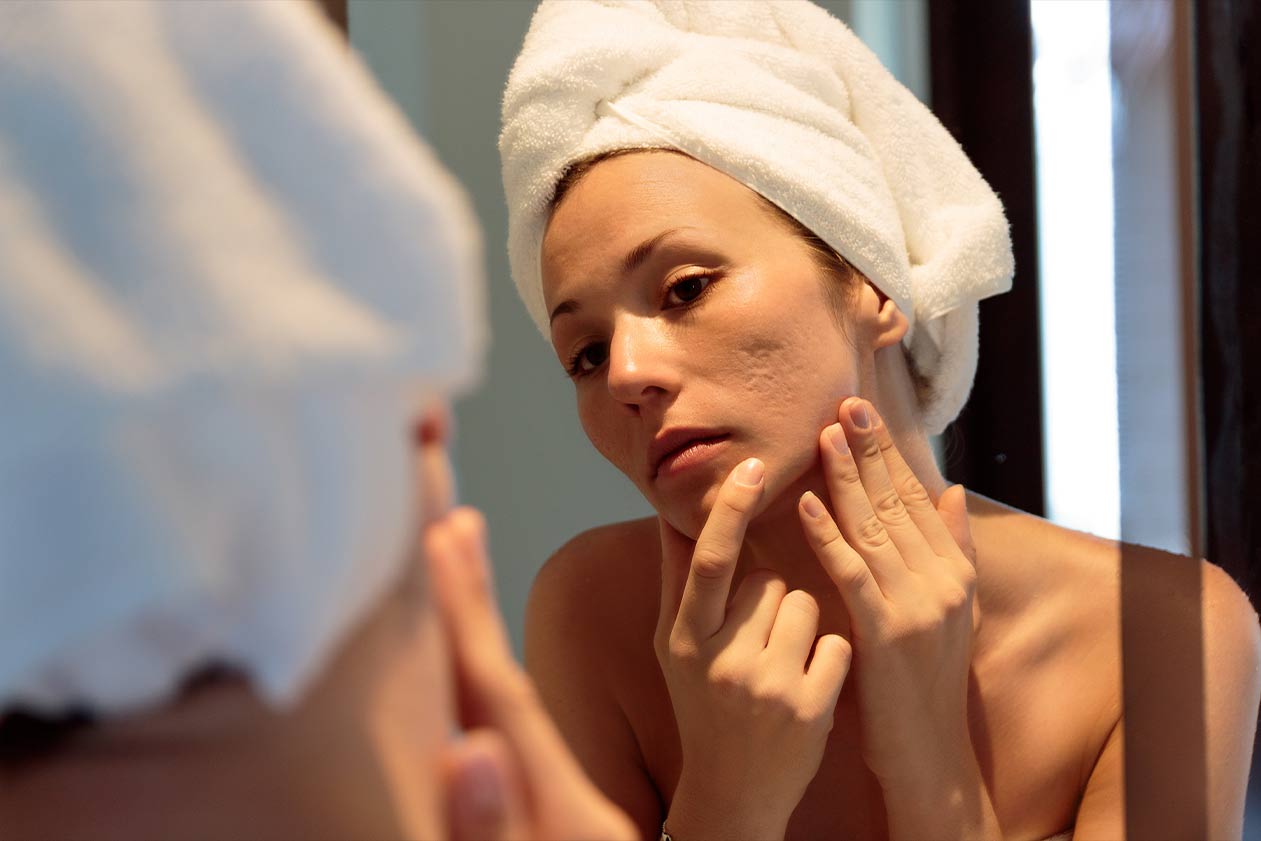
Statistics show that about 80% of adolescents and about 15% of adults aged 30-50 have acne. Inadequately treated acne often leads to scarring.
How Do Acne Scars Form?
Scar tissue forms as a result of damage to connective tissue and insufficient production of collagen fibers in the affected region. Scars <strong>do not contain elastin fibers</strong>, which can often cause scar tissue to increase over the years. The scars that form can be of different types, depths, and shapes.
Atrophic Scars: These scars form below the skin level due to a lack of connective tissue. They are indented and whitish in color.
Hypertrophic Scars: These scars are above the skin level, raised, and thickened. They most commonly occur as a result of acne on the chest or back.
Keloid Scars: Irregular scars that appear as nodules, more intensely pigmented, and reddish in color. They develop 2-3 months after wounds, inflammatory processes, burns, or on skin with a genetic predisposition for keloid acne. Such scars are often very painful.
How Can Acne Scars Be Removed?
Scars can be removed through a combination of treatments depending on their depth and age. Recommended treatments include: Chemical Peels, Mesotherapy Cocktails, PRP Treatment, Laser Treatments: Fractional non-ablative Candela Nordlys laser has proven to be extremely effective in treating scars.
Laser Treatment for Scars
The fractional non-ablative Candela Nordlys laser reduces the depth and size of scar tissue. It works at the dermis level where it creates a new collagen network and regenerates damaged connective tissue. The scars are filled with new, young skin. Laser therapy is non-invasive, safe, with minimal recovery time. Results are visible after the first treatment, and for optimal results, it is necessary to undergo a series of 4-6 treatments monthly.