


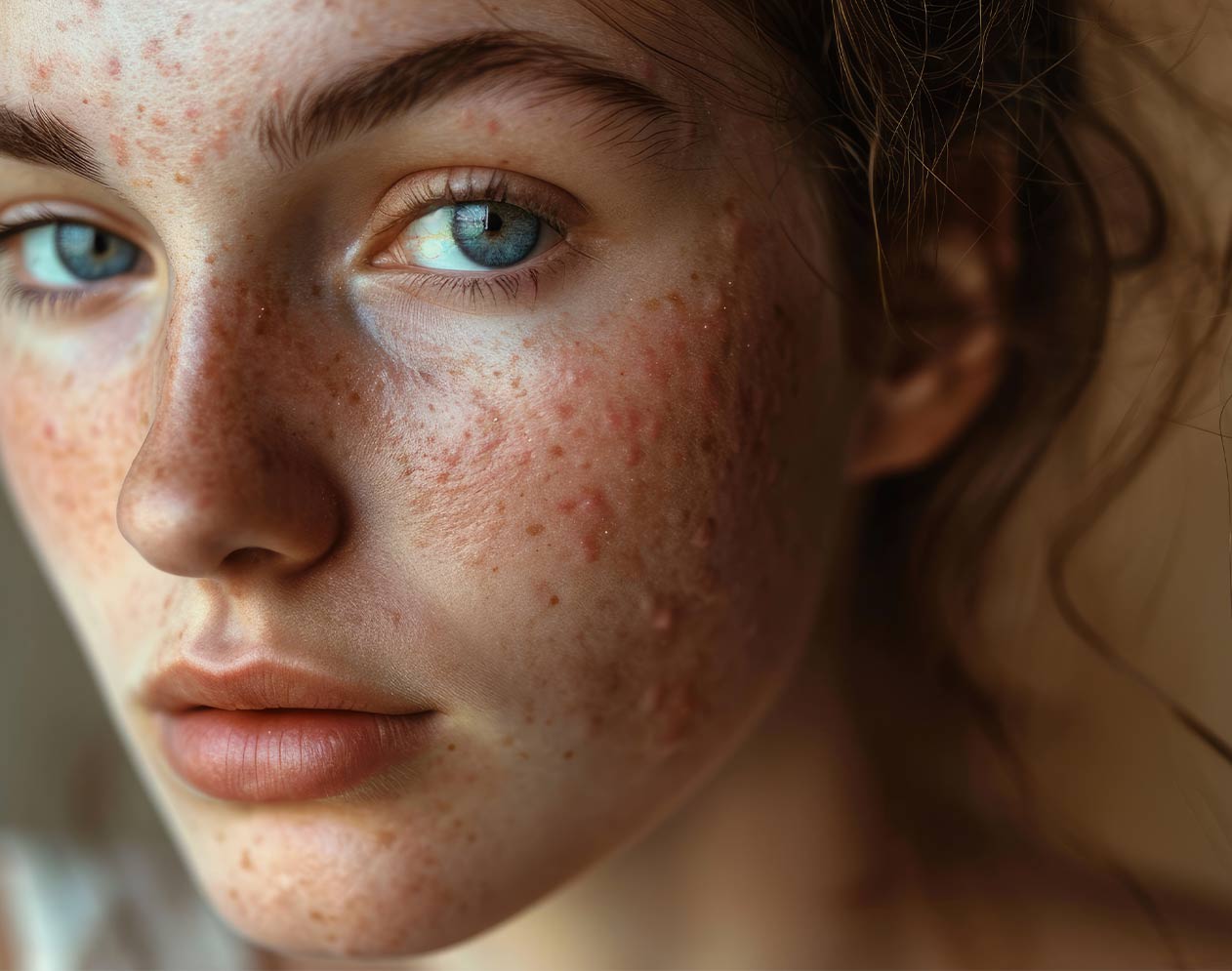
Many adolescents experience acne problems during puberty, and these consequences persist into later life due to the formation of acne scars. The main cause of acne is the result of increased sebum production in the sebaceous glands.
Individuals with oily and combination skin are prone to acne. Genetic predisposition, hormonal imbalance, as well as lifestyle factors, play an important role in the development of acne.
How Do Acne Form?
Due to increased sebum production, sebaceous glands become blocked. Bacteria accumulate in the glands, resulting in an inflammatory process on the skin. Sebaceous glands expand their channels, and when the process heals, spots and scars often remain on the skin surface, which are the consequences of acne.
Types of Acne
Open and closed comedones are the mildest forms of acne without visible inflammation, swelling, or redness. They appear as red or white spots due to a combination of dead skin cells and excess sebum that clogs pores.
Milia are chronic white changes on the skin, usually located around the eyes, cheeks, nose, and forehead. The accumulation of dead skin cells and sebum causes them. They occur just below the surface of the skin, unlike acne, which occurs within the skin pores.
Inflammatory acne can be mild or severe, depending on the course and outcome of treatment.
Papular acne is characterized by a firm texture, a raised appearance on the skin surface with mild swelling. They can be of various sizes and colors, from brown to pinkish and red. They result from the blockage of hair follicles in the skin cells and excess fat.
Pustular acne is a larger form of acne with a defined circular center filled with pus, with surrounding redness. Once the pustules harden, they become very painful and protrude above the skin surface. They mostly form on the back, chest, face, and shoulders. They are painful and sensitive to touch.
Nodules are large, hard, and painful lumps beneath the skin’s surface. Nodules are a severe form of acne and can affect deeper layers of the skin. They occur due to overly active sebaceous glands, abnormal accumulation of sebum, and production of bacteria that cause severe inflammation. Genetics may play a major role in acquiring this type of acne. Nodular acne can cause scarring.
Cystic acne is characterized by the formation of cysts and nodules along with papules and pustules. They affect deeper layers of the skin, resulting in bumps containing pus. This is a severe form of acne.
In the treatment of acne, it is often not enough to use only topical preparations, and it is necessary to include therapy by a dermatologist as well as various treatments that can reduce inflammation of the sebaceous glands.
IPL laser treatments have antibacterial and anti-inflammatory effects because their light therapy destroys bacteria and reduces sebum production. For the most optimal results, it is necessary to undergo a series of 4-8 treatments spaced one month apart.