


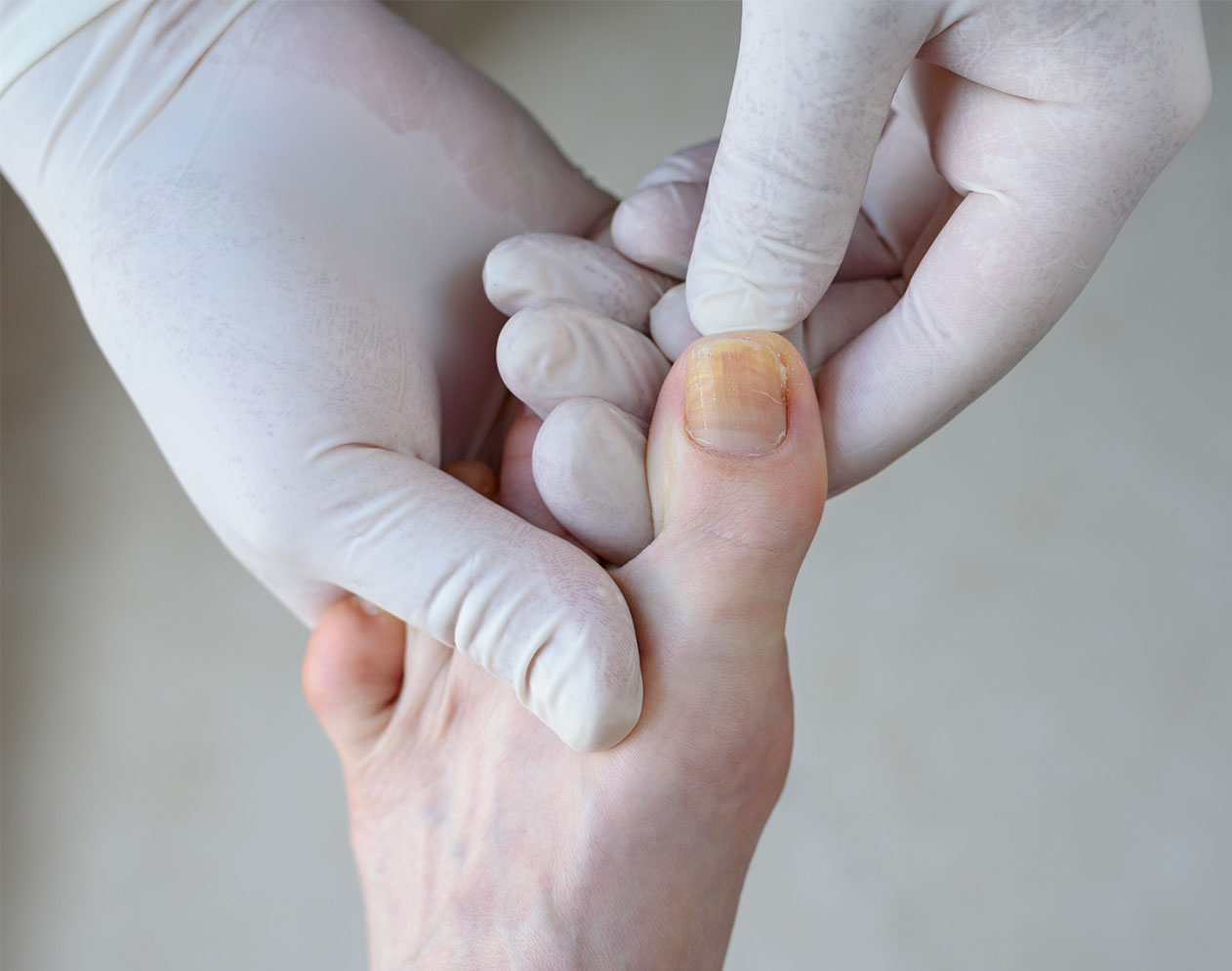
Fungi are most commonly caused by dermatophytes from the group Candida Albicans. Onychomycosis (fungal nail infection) is a very common nail infection. Risk factors for fungal infection include wearing closed shoes, poor hygiene, nail injuries, genetic predisposition, and frequent use of corticosteroid preparations.
Certain diseases can increase the risk of infection: diabetes, immunosuppressive conditions, vascular diseases, neuropathy, and psoriasis.
Clinical Picture
Changes usually begin on the sides of the nail as a white or yellow-brown spot under the tip of the nail on the hands or feet. As the fungal infection goes deeper, the nail may change color, and the affected area increases. The appearance and quality of the nail plate change. In advanced stages, nail plate separation, known as onycholysis, and subungual hyperkeratosis, which causes nail thickening and eventually nail destruction and crumbling, can occur.
If nail fungi are painful and have caused thickened nails, self-care steps and medications can help. But even if the treatment is successful, nail fungi often return. An unpleasant odor can be felt from the infected nail. Complications due to untreated infection include worsening peripheral circulation and consequently venous stasis (superficial venous insufficiency) and diabetic foot. Nail fungi are not just a health problem but also affect self-confidence and social life.
Therapy
Treatment is based on local and systemic therapy (in advanced stages) and lifestyle correction. In the iSkin clinic, in addition to standard therapeutic methods for treating fungal infections, Candela laser therapy is also used. The Nordlys Candela laser treatment involves heating the fungal tissue with selective photothermolysis, which is an advancement compared to other lasers used in fungal treatment. The laser beams move in a circular manner, covering the entire nail plate, which is very important as it removes fungi from soft tissue and prevents their spread to healthy nails.